The 2035 house minimum standard will feel like a flip phone
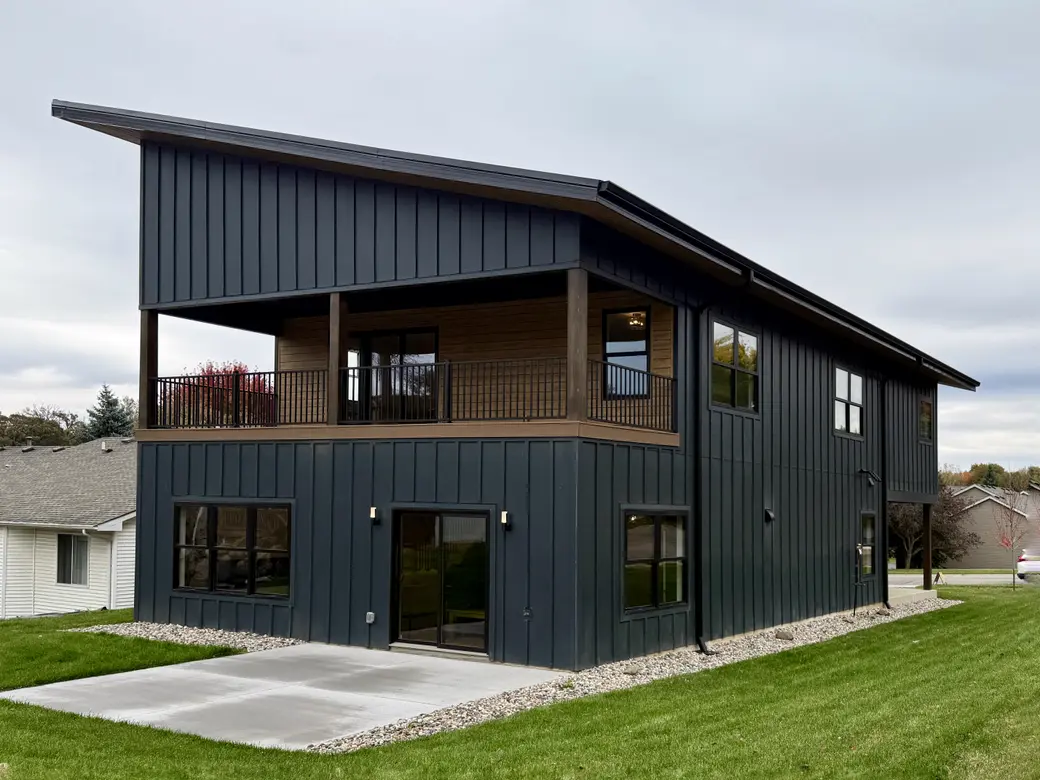
By 2035, bare-minimum houses will feel like flip phones. Tight, quiet, healthy, high-performance homes will be the baseline—not the upgrade.
1. High Performance Is the New Minimum
“Meets code” is a warning label. Tight envelopes, continuous insulation, verified air sealing, and mechanical ventilation will be the baseline, not the upgrade.
2. All-Electric, Heat-Pump Powered
Gas lines replaced by heat pumps for heating, cooling, and hot water. Electric panels are sized for EVs, induction cooking, HVAC, and future tech, future-ready.
3. Built in Panels, Not from Sticks
The workforce shortage isn’t going away. Modular, panelized, and SIP/ICF shells let builders do the heavy lifting in a factory, assemble on site in days instead of months.
4. Factory Floor First, Job Site Second
More of the house is built under one roof: walls, roofs, floors, even MEP cores, even in a snowstorm. The job site is for final assembly and finish work—no weather delay
(I’ve been on site in 6-degree weather), less waste, precision installation.
5. Smaller Footprint, Smarter Space
Think right-sized instead of massive. Flex rooms morph from office to guest to multigenerational space, with layouts that age gracefully and adapt to life changes.
6. Healthy Homes
Constant ventilation, low-VOC materials, dry basements, and mold-resistant assemblies are standard. People buy for comfort, quiet, and clean air as much as square footage.
7. Always-On Performance Monitoring
Embedded sensors and smart controls quietly track temperature, humidity, and energy use. The home can flag issues early—like a slow leak or a failing component—
before it’s a problem.
8. Faster Building with Price Control
Panelized and modular systems need smaller crews with faster building, consistent quality, shrinking timelines and price control. Think days instead of months.
9. Valued for What It Saves
Panelized and modular saves time, workforce, waste, and quality control. That converts to savings for the buyer in price, long term maintenance, slashes energy bills,
clean air for the life of the home.
If you’re buying, building, or planning in the next 10 years, build for the future, not yesterday.
Want to see what this looks like in the Twin Cities today? Let’s talk
If you’re buying, building, or planning in the next 10 years, build for the future, not yesterday.
Want to see what this looks like in the Twin Cities today? Let’s talk
Categories
Recent Posts

The Appraiser Isn't Your Enemy — The Enemy Might Be You

How Big Is Big Enough?

What Do Future Buyers Want?
By Future, I Mean Tomorrow.

WHY DOES MODULAR BUILDING APPRAISE LIKE A HOUSE?

The Hidden Cost of Cheap Windows

How to Add an ADU

Housing Missed the Industrial Revolution. Modular Is the Catch-Up Plan.

Finding a Home That Loves You Back in 10 Years

What Is—and Isn’t—Modular Construction

There Is No Kelley Blue Book for New Homes
GET MORE INFORMATION
Follow Us